Which Wrist Should You Wear a Crystal Bracelet On?
Someone gives you a crystal bracelet, you go to put it on, and then you stop. Left or right? Does it matter?
Ask in any crystal forum and you’ll get a long thread with strong opinions on both sides. Here’s the usual folklore take, plus the comfort and care stuff that ends up deciding it for most people.
If you want the stone lore first, our crystal meanings guide covers the popular ones.
The short answer: it’s your choice
There’s no rule you can break here. Crystal folklore assigns different roles to each wrist, and some people like following that map. Plenty of others just wear the bracelet where it feels good and sits nicely next to a watch.
Both are fine. The rest of this guide lays out the common folk beliefs so you can see whether any of them click for you.
What the traditions say
The idea you’ll see most often in modern crystal practice is that each wrist has a different role: one “receiving,” one “giving.” Details change from book to book and blog to blog. Treat it as folklore and personal ritual, not science.
One more caveat: some traditions flip left and right entirely. There isn’t a single authority on this, so what follows is popular modern folklore, not fixed doctrine.
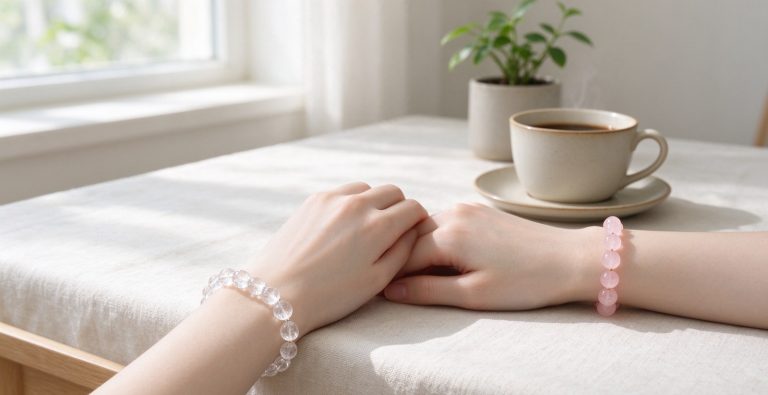
Left wrist: receiving
In the common version, the left side is the “receiving” side. People who follow it wear a stone on the left when they want to take in what the stone is said to stand for.
So someone drawn to rose quartz’s traditional link with self-kindness might wear it on the left, as a small daily nudge to go easy on themselves.
Right wrist: giving
The right side gets framed as the “giving” or “sending out” side. A stone worn here is meant to back what you put into the room: confidence at work, warmth with friends, that sort of thing.
Someone chasing a little more workplace nerve might put tiger’s eye on the right, since folklore ties it to courage and outward focus.
A note on left-handed wearers
Beliefs split here. One camp treats your dominant hand as the giving hand, so a left-handed person would reverse the usual map. Another camp keeps left-receive / right-give no matter which hand you write with. Nobody has settled it.
If you’re left-handed, pick the logic that feels less forced. That alone tells you how flexible these “rules” really are.
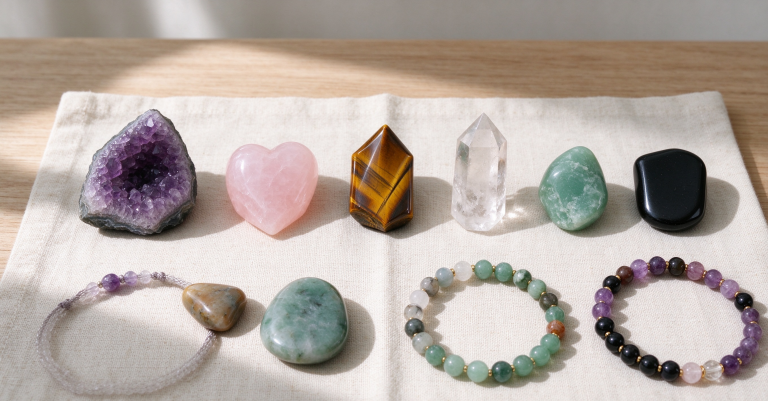
By stone: clear quartz, rose quartz, amethyst, tiger’s eye and obsidian
These are the stones people search for most when they’re stuck on which wrist. Here’s the usual folk guidance for each.
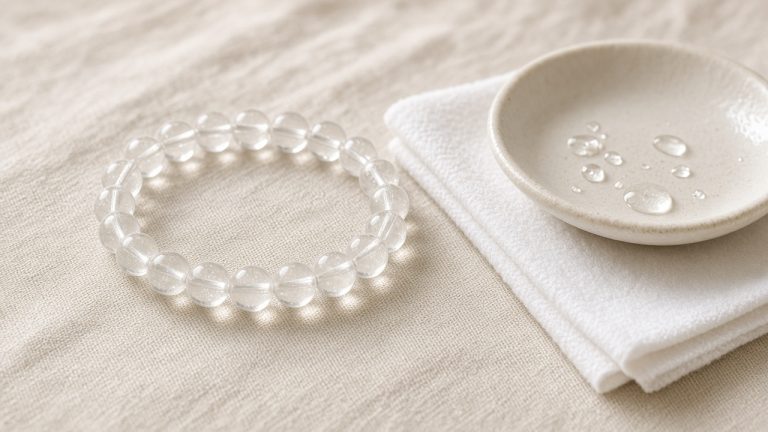
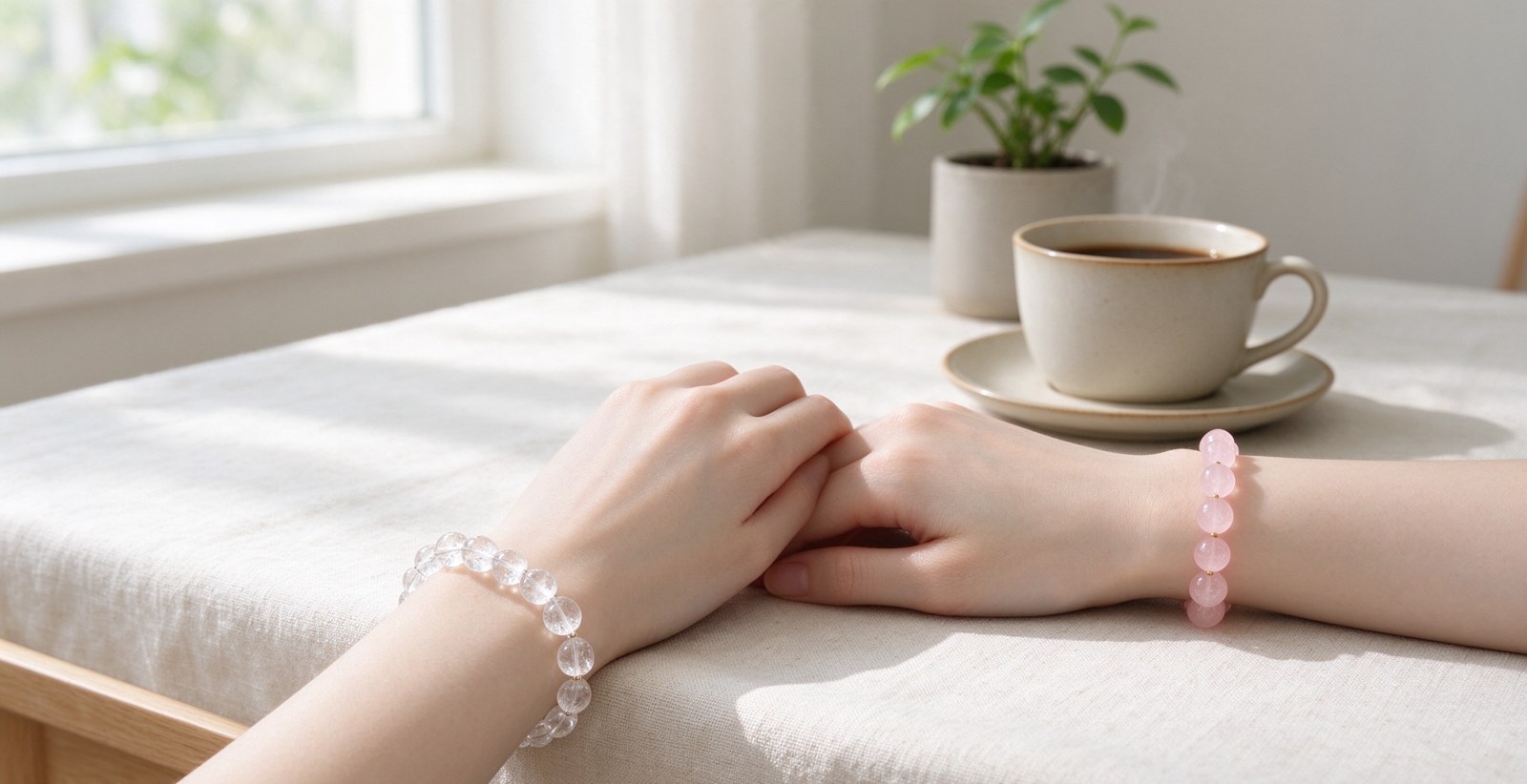
Clear quartz. In crystal lore it’s an all-rounder, so it shows up on either wrist. A lot of people stack it on the left next to another stone. If you want a simple everyday piece, the white crystal beaded bracelet goes with almost anything.
Rose quartz. Folklore links it with love, gentleness and affection, so most sources put it on the left, the receiving side. Some wear it on the right when they think of it as kindness aimed at other people.
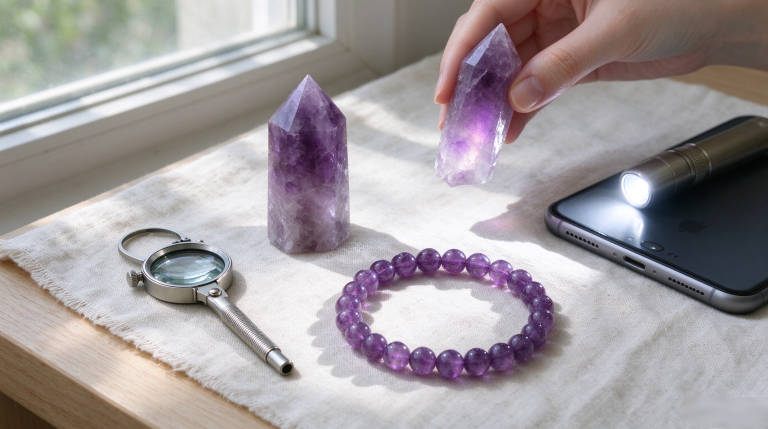
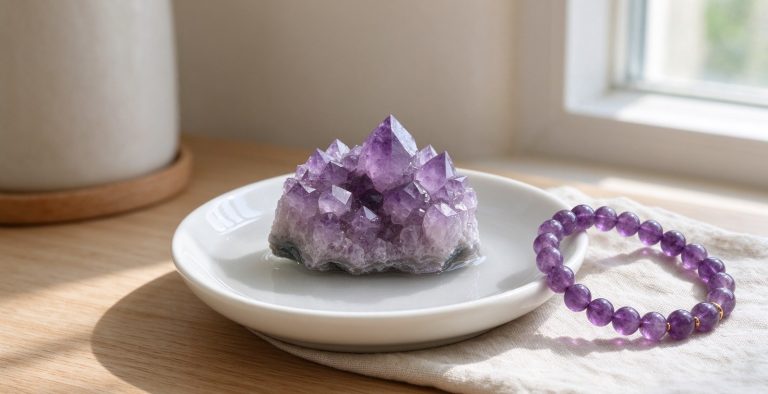
Amethyst. Tied to calm and inner reflection, so it’s often worn on the left. One practical note: amethyst can fade in strong sun over time. Our guide on how to cleanse amethyst covers care and storage.
Tiger’s eye. Folklore connects it with courage and outward confidence. For work-day intentions, people often suggest the right “giving” wrist.
Obsidian. Traditionally linked with protection, and commonly worn on the left so you “receive” that symbolism. Again, folk suggestion, not a hard rule.
If you like mixed colors, a gemstone beaded bracelet puts several stones on one strand, and the wrist question gets even simpler.
Practical tips that matter more
Whatever you decide about the beliefs, these are the things that actually change how a bracelet feels and how long it lasts.
Get the size right
A beaded bracelet should roll a little on your wrist without sliding halfway up your hand. Measure with a soft tape or a strip of paper, then add about 1 to 1.5 cm for a comfortable fit. Too tight and the elastic wears out fast.
Think about your dominant hand
Your dominant wrist hits desks, keyboards and door frames all day. If you want fewer scratches, the non-dominant wrist is the safer spot. For most people that’s the left, which happens to line up with the popular “receiving” tradition anyway.
Stacking
You can wear more than one. Plenty of people stack two or three on the same wrist, or split them across both.
Group stones of similar hardness. Soft ones like selenite should stay away from hard quartz-family beads; quartz will scratch them, whether you’re wearing the bracelets or storing them in a drawer. A watch next to beads will also leave scuffs, so leave a little gap if you can.
Take it off at night
Sleeping in a beaded bracelet puts constant strain on the cord. Take it off before bed, and before showers, swimming or the gym, so the elastic doesn’t stretch or dry out. Roll it on and off instead of yanking it wide.
FAQ
Does it matter which wrist I wear a crystal bracelet on?
In crystal folk tradition, many people follow left-for-receiving and right-for-giving. Practically, pick the wrist that feels comfortable and keeps the beads away from constant bumps.
Can I stack multiple crystal bracelets?
Yes. Stacking two or three, or mixing different stones on one wrist, is common. Just keep soft stones away from hard quartz-family crystals so they don’t scratch each other.
Should I sleep with my crystal bracelet on?
Better to take it off. Overnight wear wears out the cord faster and lets beads rub against the bed frame or your other wrist.
Which hand should a clear quartz bracelet go on?
Traditional sources treat clear quartz as fine on either wrist. Wear it wherever feels natural.
Can I switch wrists?
Of course. Plenty of people move a bracelet around based on the day, the outfit, or what their hands are doing.
Which wrist for obsidian or tiger’s eye?
Folk guidance often puts protective obsidian on the left (receiving) and tiger’s eye for outward confidence on the right (giving). Suggestions only, not strict rules.
Pieces mentioned in this guide
Disclaimer: Crystal meanings mentioned on this site describe traditional beliefs and are shared for educational and enjoyment purposes only. Crystals are not a substitute for professional medical, psychological or financial advice.