Can Crystal Jewelry Get Wet? A Water-Safe Guide for Rose Quartz, Amethyst & More
Quick answer: Many quartz-family stones can handle a brief rinse. Your finished jewelry often cannot. Stretch cord, gold plating, glue, and glass accents take the real hit from water, soap, chlorine, and salt. Take pieces off before swimming, showering, or exercise. Keep them away from perfume, lotion, and household cleaners. Wipe with a soft dry cloth.
The short answer: stone vs. finished piece
When people ask whether crystal jewelry can get wet, they usually mean the stone. That is only half the story. A polished bead may shrug off a splash. The cord, plating, or adhesive often will not.
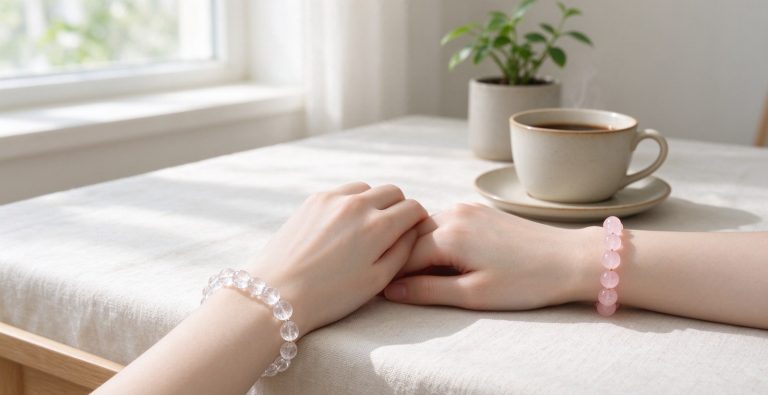
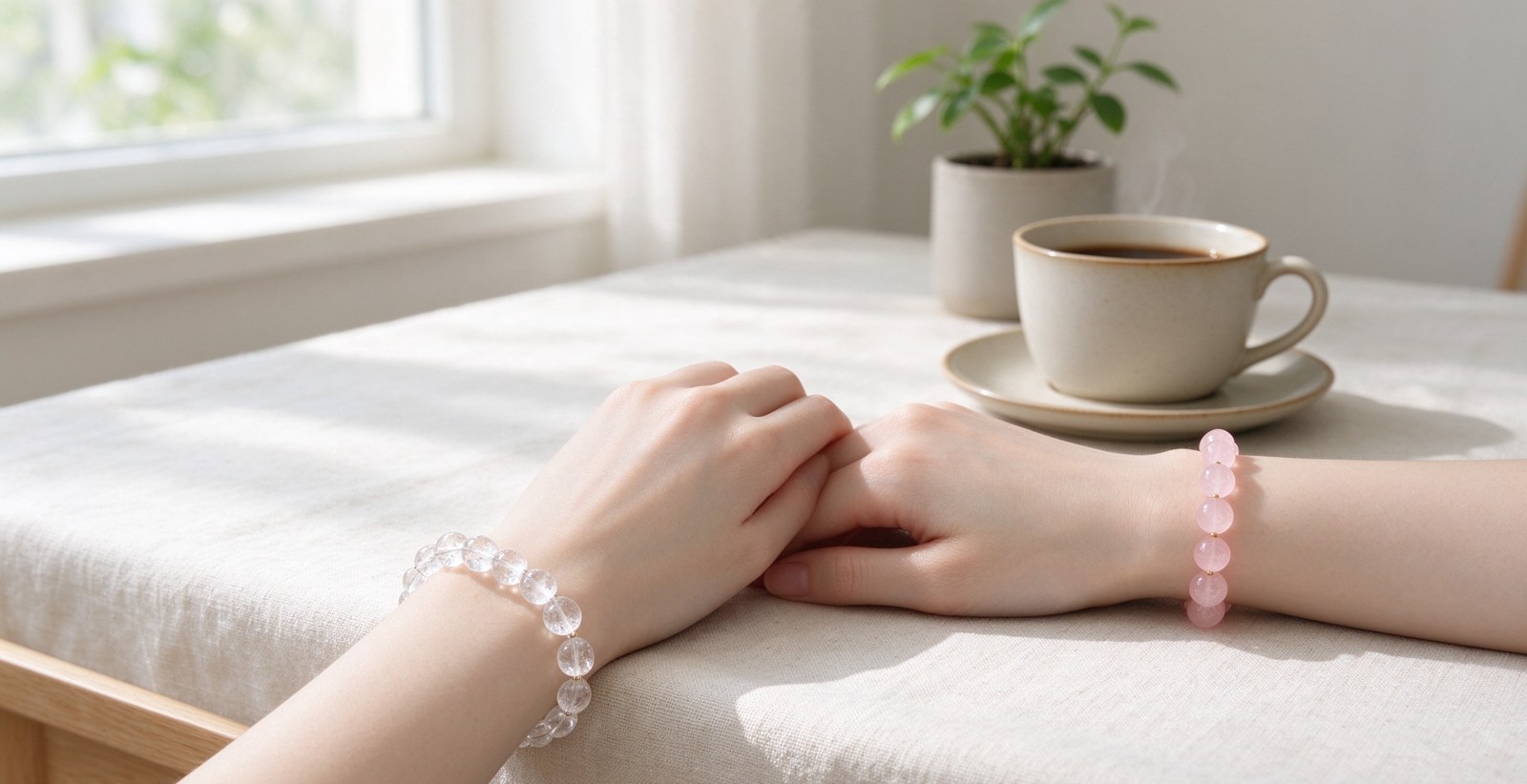
Can rose quartz get wet? Yes for a quick rinse under cool or lukewarm water. Skip long soaks, hot water, and salt baths, then dry it right away.
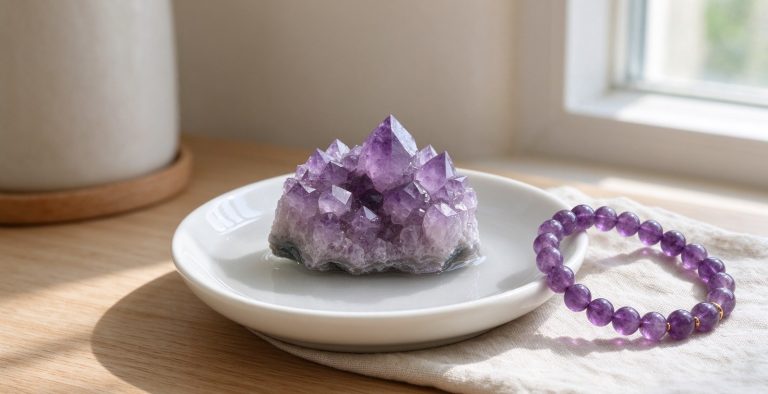
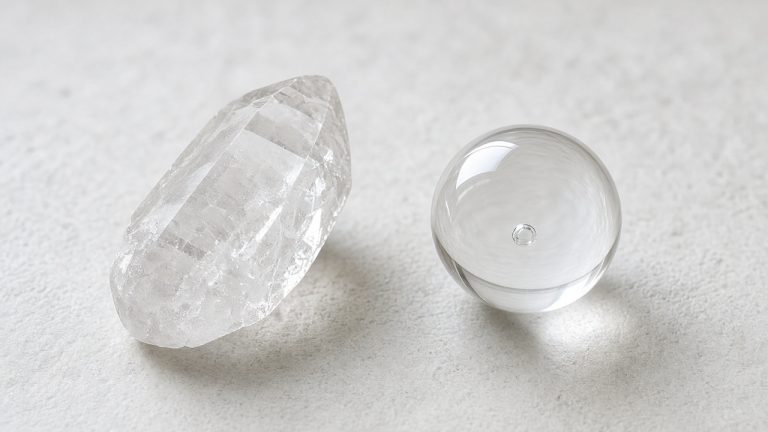
Can amethyst or clear quartz get wet? Same rule: a short rinse is usually fine. Dry thoroughly. Keep amethyst out of strong, prolonged sun if you want to protect the purple tone.
Mohs hardness alone is not a water-safety score. Pyrite sits around 6 to 6.5 and still rusts. Lapis lazuli can include pyrite or calcite, so hardness on paper does not mean a soak is safe.
Why quartz-family stones handle a rinse
Clear quartz, rose quartz, and amethyst sit near Mohs 7. They are generally non-porous in polished form, so a brief plain-water rinse rarely etches them. That is why quartz beads are treated as more water-tolerant than soft minerals like selenite or calcite.
Still be cautious. Soap, heat, and leftover moisture in bead holes matter more than textbook hardness. Treat a rinse as cleaning, not a daily habit.
What actually gets damaged: stretch cord, plating, glue, glass accents
Most wear-and-tear comes from the construction, not the gem label.
- Stretch cord absorbs water, weakens, and can lose snap after repeated soaks.
- Gold plating thins with friction, soap, and chemicals.
- Glue on charms, cluster backs, and some settings softens when wet for long periods.
- Glass accents and fiber-optic glass (including many cat’s eye style beads) can cloud or loosen with soap and heat.
Store care language is simple: take it off before swimming, showering, or exercise. Keep it away from perfume, lotion, and household cleaners. Wipe with a soft dry cloth.
Water-safe crystal chart
Quick reference for common stones in finished jewelry. Ratings are approximate. Cord, metal, glass, and glue still set the real limit.
| Stone | Mohs (approx.) | Quick rinse? | Soak? | Notes |
|---|---|---|---|---|
| Clear quartz | ~7 | Usually yes | No | Dry cord and metal thoroughly after any rinse |
| Rose quartz | ~7 | Usually yes | No | Cool or lukewarm water only; dry right away |
| Amethyst | ~7 | Usually yes | No | Protect color from long, strong sun after cleaning |
| Black agate | ~6.5–7 | Usually yes | No | Polished beads handle brief rinses better than rough pieces |
| Sunstone | ~6–6.5 | Brief rinse only | No | Softer than quartz; avoid abrasives and long wet wear |
| Lapis lazuli | ~5–6 | Better keep dry | No | Often porous; may contain calcite or pyrite |
| Selenite | ~2 | No | No | Dissolves and softens in water |
| Calcite | ~3 | No | No | Soft; water and acids can etch the surface |
| Halite | ~2–2.5 | No | No | Salt mineral; dissolves in water |
| Pyrite | ~6–6.5 | No | No | Can rust and leave stains when wet |
| Hematite | ~5.5–6.5 | No | No | Iron-rich; moisture encourages rust and dulling |
| Malachite | ~3.5–4 | No | No | Soft and porous; water and chemicals can damage it |
| Turquoise | ~5–6 | No | No | Porous; absorbs oils, soap, and dyes |
| Opal | ~5.5–6.5 | No | No | Sensitive to water swings and drying after soaks |
Crystals that shouldn't get wet (and why)
Some stones fail in water for simple chemistry reasons.
They dissolve or soften. Selenite, calcite, and halite are soft. Water can pit, cloud, or dissolve them.
They rust or oxidize. Pyrite and hematite are iron-rich. Moisture can dull shine and leave orange-brown marks on cord or skin.
They are porous or chemically sensitive. Turquoise, lapis lazuli, malachite, and opal soak up liquids more readily than dense quartz. Soap, lotion, chlorine, and salt can leave stains a soft cloth cannot reverse.
If a piece mixes stones, care for the most sensitive material in the mix.
Everyday situations
Showering and bathing
Should you shower with a crystal bracelet? Better not. Soap, shampoo, and hot water are harder on elastic than plain cool water, and steam helps residue settle in bead holes.
Rings with plating and glued accents belong on the sink tray, not under the shower head.
Swimming (pool, sea, hot tub)
Can you swim with crystal jewelry? No. Chlorine, salt, and hot-tub chemicals attack plating, elastic, and adhesives. Salt left in crevices keeps drawing moisture afterward.
Even if the stone is quartz, the finished piece is not built for pool days. Put jewelry in a dry pouch before swimwear.
Hand-washing, dishes, cleaning products
Can you wash hands with a crystal ring? An occasional splash is usually fine for a sturdy gold-plated ring if you dry it after. Remove it for dishwashing and cleaners with bleach, alcohol, or abrasives.
Cleaners strip plating faster than plain water, and soap under a setting can dull metal or loosen glue.
Gym, sweat, sunscreen and lotion
Sweat is salty enough to bother plating and cord. Sunscreen and lotion leave films that trap grit. Put jewelry on after skincare has absorbed, and take it off before workouts.
If a bracelet sat on lotion-covered skin, wipe it with a soft dry cloth. Do not rinse every day unless you also dry the cord completely.
By jewelry type
Beaded stretch bracelets
Stretch bracelets look tough because the beads are hard. The cord is the weak link.
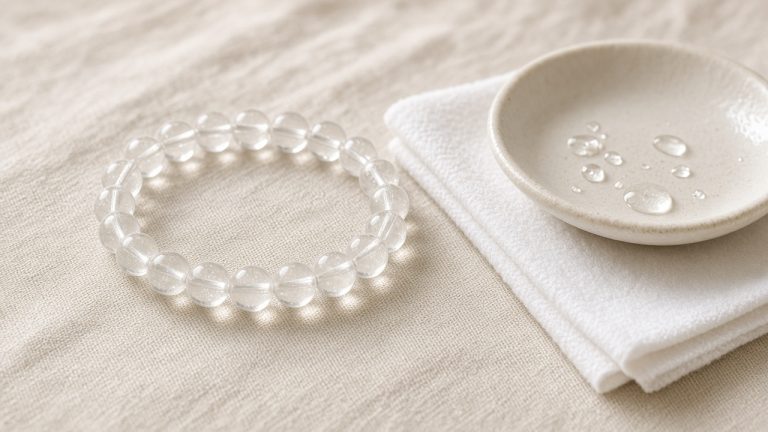
A clear quartz beaded bracelet can usually handle a careful rinse of the beads if you dry the strand flat afterward. Still take it off for showers and swims.
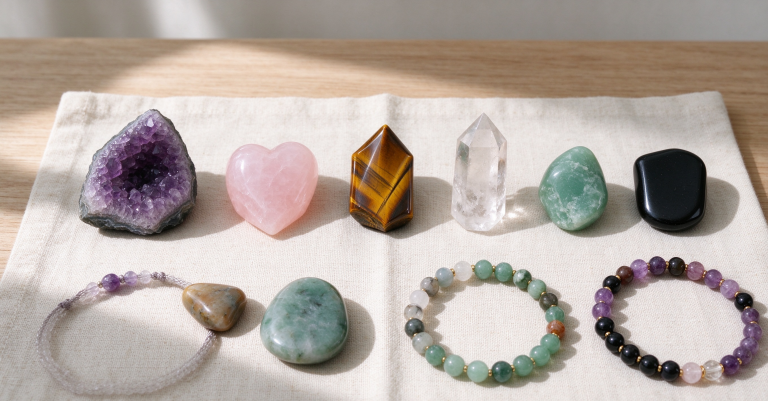
A mixed gemstone bracelet may include softer or more porous stones beside quartz. Care for the most delicate bead in the strand.
A light purple bracelet with a zircon charm adds metal details that dislike soap and chlorine. Keep the charm dry when you can, and wipe the piece after wear.
A cat’s eye bracelet in this collection is fiber-optic glass style jewelry, not a hard quartz bead. Keep it dry. Wipe with a soft dry cloth and store it away from heat and cleaners.
Gold-plated rings
A geometric gold-plated crystal ring can take a light splash while you rinse your hands. Remove it for dishes, cleaners, and long hand-washing. Dry the band and stone seat so moisture does not sit under the setting.
Plating wears with friction, and wet wear plus lotion speeds that up. Keep water chores jewelry-free.
Raw crystal pendants on cord
Raw pieces have cracks and pockets where water lingers longer than on a smooth bead.
A raw amethyst cluster pendant is fine for a brief rinse if you blot every crevice and air dry fully before wearing again. Skip soaks.
A raw crystal column pendant on cord needs the same caution for the hanging material. Wet cord can stretch or stain if it stays damp against skin.
Glass-crystal statement jewelry
The vintage floral statement set uses faceted glass crystal on plated alloy. Keep it dry. Soap films show easily on glass, and plating does not love water or perfume spray.
Call this glass crystal for care purposes. Treat it like fashion jewelry: dry cloth only, no swimming, no shower.
What to do if your crystal jewelry gets wet
- Pat dry right away. Use a soft, lint-free cloth. Press into bead holes, under settings, and along cord.
- Lay flat to finish drying. Do not hang a wet stretch bracelet; hanging can pull the elastic while it is soft.
- Check stretch and closures. Gently test the bounce of stretch cord and look for fray, sticky glue, or dull spots on plating.
- Rest before wearing again. Wait until the piece feels fully dry to the touch, especially inside raw clusters and under pendant bails.
If a bracelet got soaked in a pool or hot tub, the cord may already be compromised even if it looks fine.
How to clean crystal jewelry safely
Physical cleaning keeps pieces looking bright without soaking them into early retirement.
For quartz-family beads that tolerate a rinse, use a short stream of cool or lukewarm water, then dry every surface. For mixed strands, plated rings, glass crystal, and cat’s eye style bracelets, skip the sink and wipe with a soft dry cloth.
Avoid ultrasonic cleaners, steam, abrasive pastes, and household sprays. Those tools suit hard metals, not stretch jewelry and plated finishes.
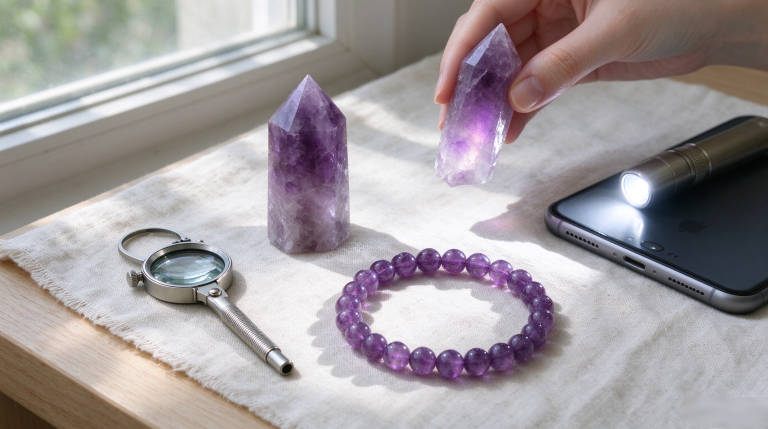
For related physical-care reading, see how to cleanse amethyst. For visual checks on purple pieces, read how to tell if amethyst is real. Broader folklore background lives on crystal meanings. Wear habits, including which wrist to wear a crystal bracelet on, are style choices first.
Tumbled stones that are quartz can usually take a quick rinse in a sieve, then a full dry on a towel. Raw pieces need extra drying time because water hides in fractures.
Storing pieces between wears
Dry storage protects cord and plating as much as the stones.
- Keep jewelry in a soft pouch or lined tray, away from bathroom humidity.
- Separate plated pieces from harder beads so edges do not scratch soft metal.
- Let a piece dry after wear before sealing it in a closed box.
- Store glass crystal and fiber-optic glass bracelets away from perfume and cleaners.
If you travel, use a small zip pouch instead of a damp gym bag. Moisture plus fabric dye can stain light cords and pale quartz.
FAQ
Can rose quartz get wet?
Yes for a quick rinse in cool or lukewarm water. Avoid long soaks, hot water, and salt. Dry the stone and any cord or metal right away.
Can I shower with my crystal bracelet?
Better not. Soap, shampoo, and hot water wear out stretch cord and leave residue in bead holes. Take bracelets off before the shower or bath.
Can amethyst go in water?
A short rinse is usually fine. Dry it well. Long stretches in strong sun can fade the purple, so keep drying out of harsh light when you can.
Which crystals can’t get wet?
Selenite, calcite, and halite can dissolve or soften. Pyrite and hematite can rust. Turquoise, lapis lazuli, malachite, and opal are porous or sensitive, so keep those dry.
My bracelet got wet. Now what?
Pat it dry, lay it flat until the cord is fully dry, then check the stretch for looseness or fray. Skip wearing it until every bead hole feels dry.
Can I wear a gold-plated crystal ring while washing hands?
An occasional splash is usually OK if you dry the ring after. Remove it for dishwashing and household cleaners.
Can tumbled or raw crystals go in water?
Quartz tumbled stones can usually take a brief rinse. Raw pieces trap water in cracks, so keep any rinse short and dry them thoroughly before storage or wear.
Shop dry-friendly habits
If you want everyday sparkle without guessing at pool rules, start with pieces you can pull off before water shows up. Browse all bracelets for stretch styles that pair with a simple dry-cloth routine. Rose quartz is associated with love in folklore; beyond that nod to tradition, treat every piece as jewelry that needs ordinary care.
Stone meanings shared here come from folklore and tradition and are not health or medical claims.