How to Clean Crystal Jewelry (and When to Restring a Stretch Bracelet)
Quick answer: Start with a soft dry microfiber cloth. If residue remains, wipe with a barely damp cloth and dry at once. Never soak stretch bracelets, plated rings, or glass costume pieces. Restring when the cord frays, stays loose, or gaps appear between beads.
Crystal jewelry picks up skin oils, lotion film, and dust faster than most people expect. The stone usually survives. Stretch cord, plating, glue, and foil-backed glass often do not. This guide covers physical cleaning of finished pieces at home, by construction type, plus a clear checklist for when to restring a stretch bracelet.
Cleaning vs. cleansing
Here, “clean” means removing dirt and oils from the jewelry you wear. It is not a ritual guide. For amethyst-specific notes on water, salt, and sun as physical methods, see our existing post on how to cleanse amethyst. We skip moon, smoke, and similar steps in this article.
If you want stone background or folklore, our crystal meanings page is separate from day-to-day care.
What you’re actually cleaning
A finished bracelet or necklace is a small system:
- Stone or glass surface , fingerprints, makeup, dust
- Cord or chain , oils that settle in bead holes and links
- Plating , thin metal layers that scratch or dull with abrasives and long soaks
- Glue and settings , soft spots on charms, cluster backs, and some rings
- Drill-hole buildup , the grime that collects where beads meet the cord
That is why loose-stone advice (full salt baths, long soaks, ultrasonics) often fails on jewelry you already wear.
Tools that are enough (and free)
You do not need specialty jewelry machines for home care. A short list covers almost every finished piece in a crystal jewelry box:
- Clean microfiber or soft cotton cloths (keep one dry-only cloth)
- Cool or lukewarm tap water for an optional damp wipe
- A soft, clean makeup brush or unused soft toothbrush for raw cluster dust (dry use)
- A flat towel for drying stretch bracelets
Skip powdered cleansers, baking-soda pastes, and kitchen scrubbers. They scratch soft coatings and some glass finishes. If a cloth cannot lift the film, stop and reconsider whether the piece needs restringing or professional attention rather than more force.
The default method (most Zestnook pieces)
Use this for everyday dirt on polished beads, simple pendants, and rings when the listing says wipe with a soft dry cloth.
- Inspect. Look for frayed cord, loose clasps, cloudy plating, or glue that already looks soft. If the piece is failing, clean gently and plan a restring or repair instead of scrubbing harder.
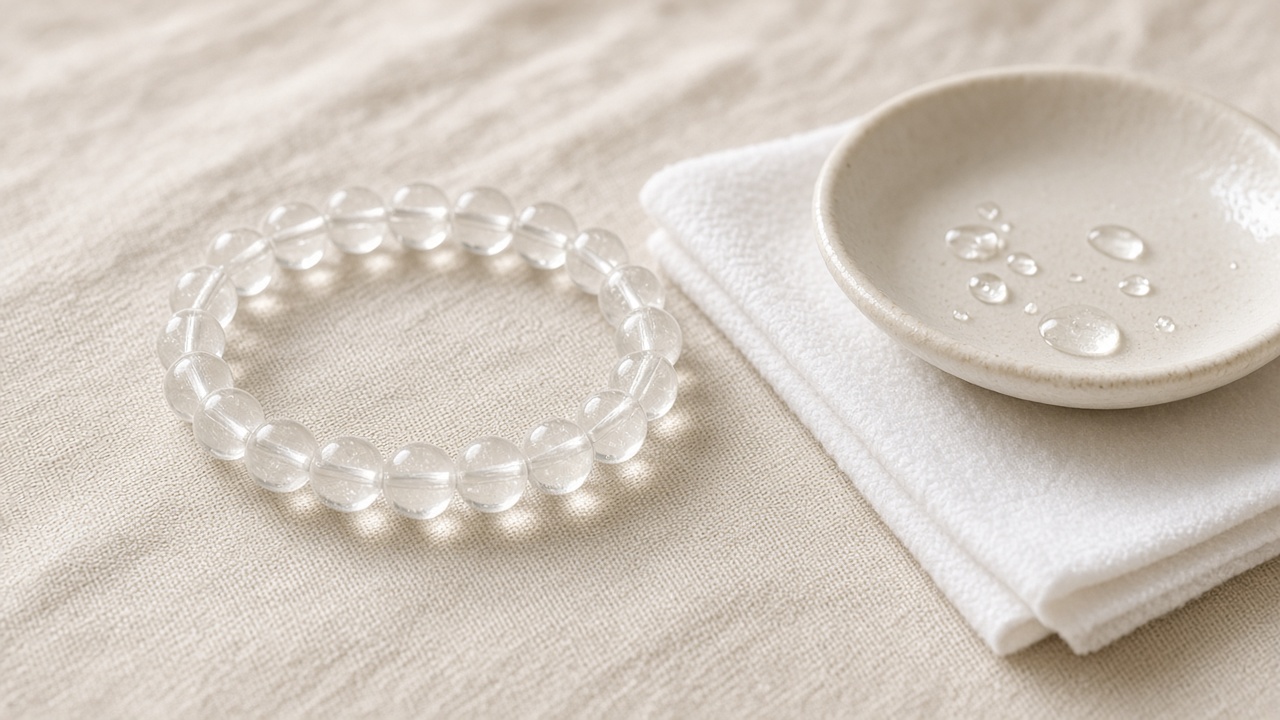
- Dry wipe. Fold a clean microfiber or soft cotton cloth. Wipe each bead or surface. For bracelets, rotate the piece so you reach the undersides.
- Optional damp wipe. If a film remains, dampen a corner of the cloth with cool or lukewarm water. Wring it almost dry. Wipe once. Do not dunk the jewelry in a bowl.
- Remove residue. Follow with a dry section of the cloth so no moisture sits in bead holes.
- Dry flat. Lay stretch bracelets flat on a towel. Hang clasps only if the cord is metal or non-elastic and the piece is fully dry.
- Rest. Give elastic a few hours off your wrist after a damp wipe so residual moisture can leave the cord.
Wipe after wear when you see film. There is no need for a weekly “deep clean” if the piece looks fine.
After lotion, perfume, and gym sweat
Put bracelets and rings on after lotion and perfume have dried. Chemicals and alcohol in fragrance can dull plating and leave a sticky film that attracts dust. After a workout, wipe pieces before they sit in a gym bag. Sweat plus elastic is a common reason stretch cord looks tired early.
If you stack multiple bracelets, take them off one at a time when cleaning so cords do not rub wet against each other. Wipe, dry, then restack.
By jewelry type
Stretch beaded bracelets
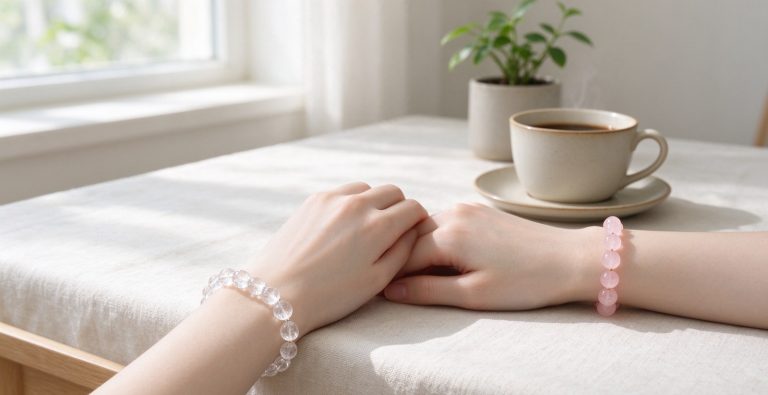
Most of our everyday stacks use stretch cord. Treat the cord as the weak link.
- Prefer dry cloth only.
- If you need a damp wipe, keep water off the cord as much as possible and dry between beads.
- Never soak, never wear into the shower, and never leave a wet bracelet balled up in a pocket.
Examples that follow this care line: our clear quartz beaded bracelet, mixed gemstone bracelet, and geometric zircon amethyst bracelet. For fit after restringing, use the size guide.
Clasp and double-layer bracelets
Clasp pieces and double-layer designs add metal findings and more friction points. Wipe beads first, then wipe the clasp and any chain links. Check that clasps still snap cleanly after cleaning. Our double-layer amethyst bracelet is a good example: keep soapy water away from the layers where moisture can hide.
Raw cluster and point pendants
Raw clusters hold dust in tiny pockets. Use a dry soft brush or cloth tip to lift dust from crevices. Avoid flooding those pockets with soap.
Raw pockets can trap toothpaste splash or soap if you clean jewelry in a bathroom sink. Work over a soft towel on a table instead. If a cluster still looks dusty after a dry brush, a single damp-cloth pass on the outer faces is enough. Leave deep pockets mostly dry.
Wipe the cord or chain separately while supporting the pendant so it does not swing into a hard surface.
See the raw amethyst cluster pendant and raw crystal point pendant for the construction this advice covers.
Gold-plated rings
Plating is thin. Skip jewelry dips, ultrasonic machines, toothpaste, and polishing pastes. Dry cloth is the default. A barely damp wipe is fine for skin oils; dry immediately. Store rings separately so harder stones do not scratch the plate. Care for pieces like our geometric gold-plated crystal ring the same way.
Glass crystal statement set
Costume and glass crystal sets often use foil backs, glued stones, and plated alloy. Water can dull foil and loosen glue. Dry cloth only. That includes the vintage crystal floral jewelry set: treat it as glass costume jewelry, not as solid gemstone.
Cat’s eye beads (glass-class care)
Many cat’s eye style beads are fiber-optic glass. Clean them like glass costume pieces: soft dry wipe, no soaking, no abrasives, no ultrasonic. Do not treat them as natural gemstone care. Our cat’s eye bracelet follows that glass-class approach on the product page.
What not to use
These methods show up in general “stone cleaning” advice. They are a poor fit for finished jewelry:
- Salt soaks , abrasive and hard on cord, metal, and soft surfaces
- Ultrasonic cleaners , can stress stones, loosen glue, and damage elastic
- Steam , heat and moisture hit plating and adhesives
- Bleach, alcohol baths, or jewelry dips , harsh on plating and some stone coatings
- Boiling water , thermal shock plus elastic failure
- Long hot sun on stretch bracelets , elastic ages faster in heat
Mild fragrance-free soap belongs on a cloth corner only when dry wiping fails, never as a bowl soak for stretch or plated pieces.
When to restring a stretch bracelet
Elastic fails gradually, then suddenly. Plan a restring when you notice any of these:
- Cord looks fuzzy, thin, or frayed between beads
- Bracelet stays loose after resting flat overnight
- Gaps open between beads when the bracelet hangs
- You can see whitened, stretched cord at the knots
- The piece rolls off the wrist too easily compared with when it was new
Between wears, store stretch bracelets flat rather than hanging. Hanging keeps constant pull on the cord. DIY restringing with jewelry-grade elastic is fine if you are comfortable; a local jeweler can do it too. We do not promise free restringing unless a specific order policy says so.
If you stack several bracelets, a bracelet stack gift box keeps them from tangling and reduces stretch while they sit unused. For wrist preference questions (style preference, not folklore rules), see which wrist to wear a crystal bracelet on.
A simple weekly rhythm (optional)
People often ask for a calendar. Jewelry does not need one if you wipe when you see film. If you prefer a habit:
- Quick dry wipe after days you wore lotion or sunscreen
- Flat storage at night for stretch styles
- Monthly check of cord, clasps, and plating under bright light
- Restring on the first sign of fray rather than waiting for a snap
That rhythm protects the construction more than any aggressive polish cycle.
Water, shower, and swimming
A quick splash is different from wearing jewelry in the shower, pool, or ocean. Stretch cord, plating, and glue take most of the damage. For the full water-safe breakdown by stone and construction, read Can Crystal Jewelry Get Wet?
FAQ
How do I clean crystal jewelry at home?
Wipe with a soft dry microfiber cloth. If needed, use a barely damp cloth, then dry immediately. Avoid soaking stretch bracelets.
Can I wash a crystal bracelet with soap?
Prefer no soap. If film remains, one tiny drop of mild fragrance-free soap on a damp cloth (not in a bowl of water), then wipe the soap off and dry.
How do I clean a crystal necklace?
Support the pendant, wipe the stone, then wipe the cord or chain. Do not soak raw clusters in soapy water.
How often should I clean my crystal bracelet?
Wipe when you see oils or dust. There is no fixed weekly schedule for physical cleaning.
When should I restring a stretch bracelet?
If the cord frays, looks fuzzy, stays loose after resting flat, or gaps open between beads.
Can I use an ultrasonic cleaner on crystal jewelry?
No. It risks stones, glue, plating, and cord.
How do I clean glass crystal jewelry?
Dry cloth only. Keep water away from foil-backed or plated costume pieces.
Is cat’s eye jewelry cleaned like quartz?
Treat cat’s eye beads as glass-class: dry wipe, no soaking, no abrasives.
Shop bracelets and stacks
Browse the full bracelets collection, or pick a ready stack in the bracelet stack gift box. Free shipping on $99.99+ where available (confirm at checkout).
Note: Any stone folklore on our site is tradition and style context, not a health claim. This article is about physical cleaning and cord care only.